Entrance and Staircases
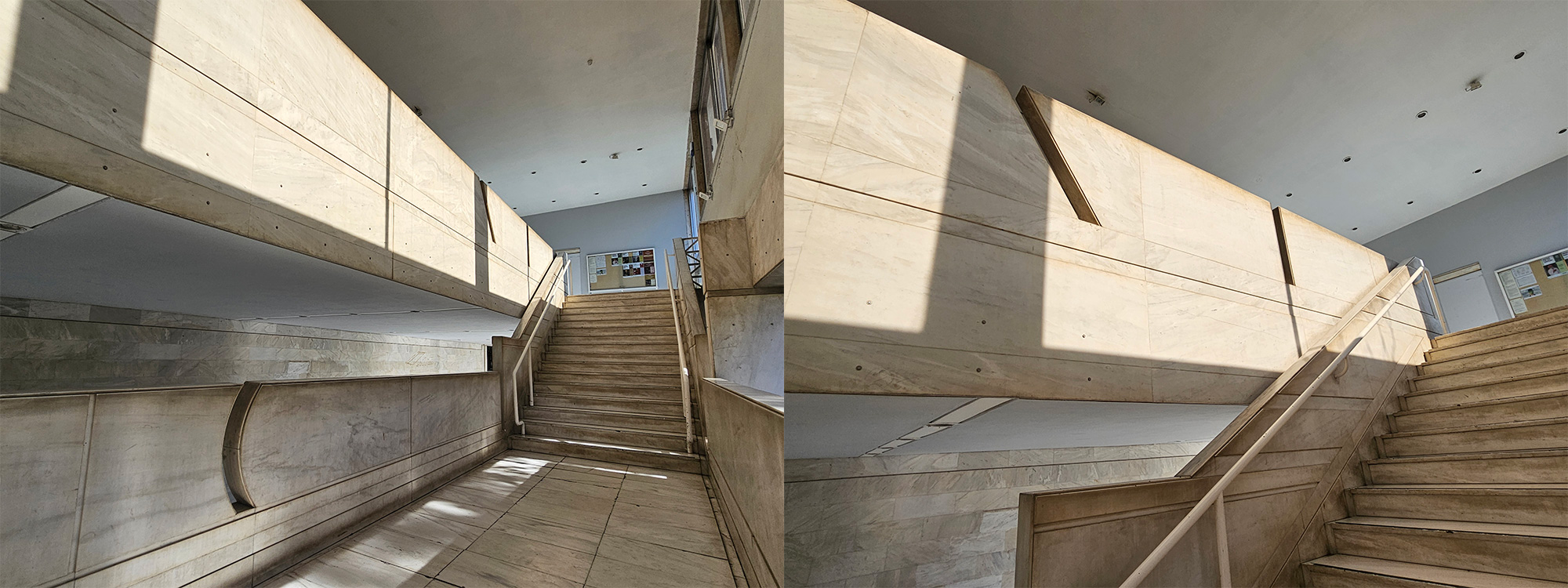
The building does not have a single main entrance. There are seven different entrances to the ground-floor areas from the colonnade, while access to the first floor is provided by three external staircases within the perimeter of the colonnade.
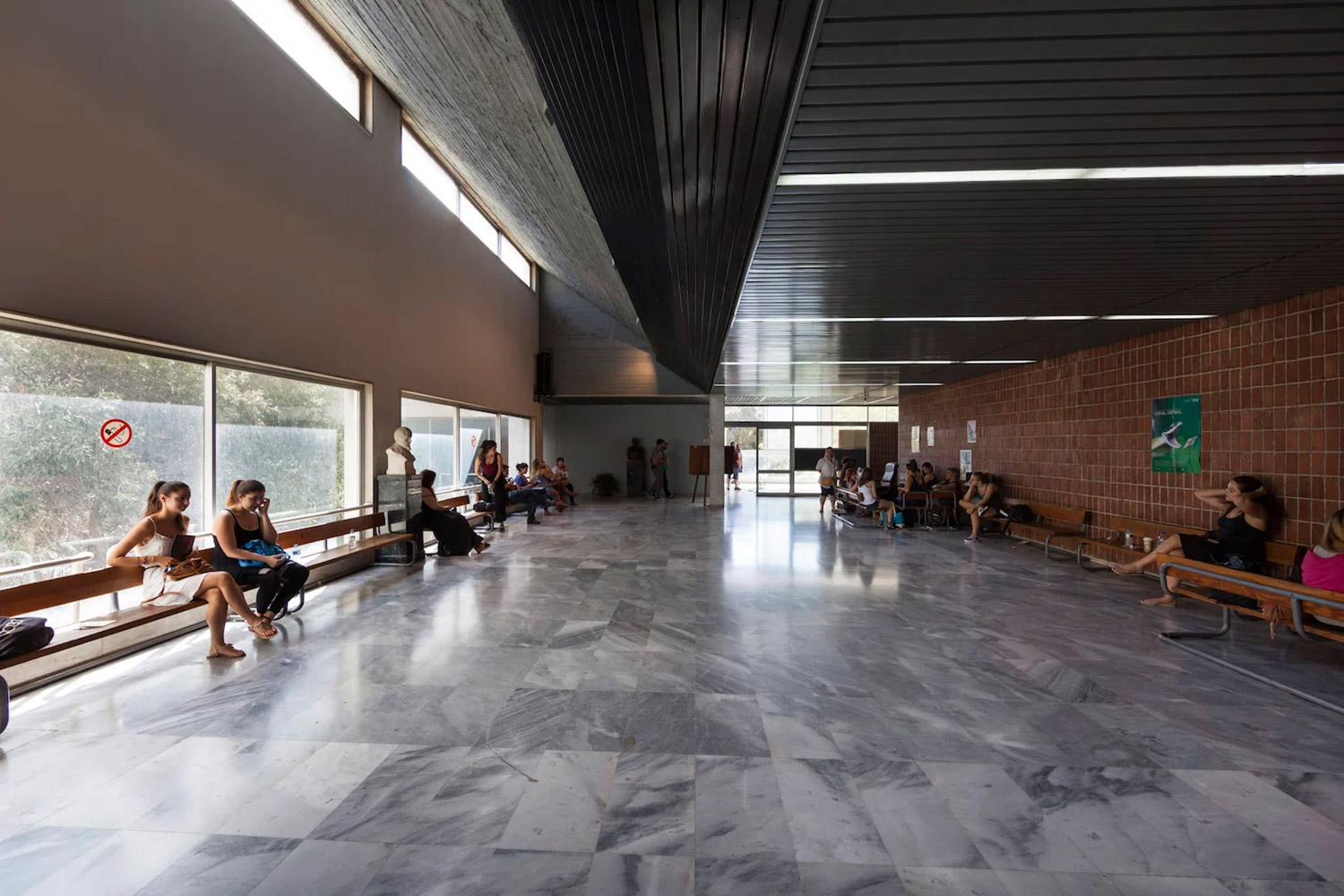
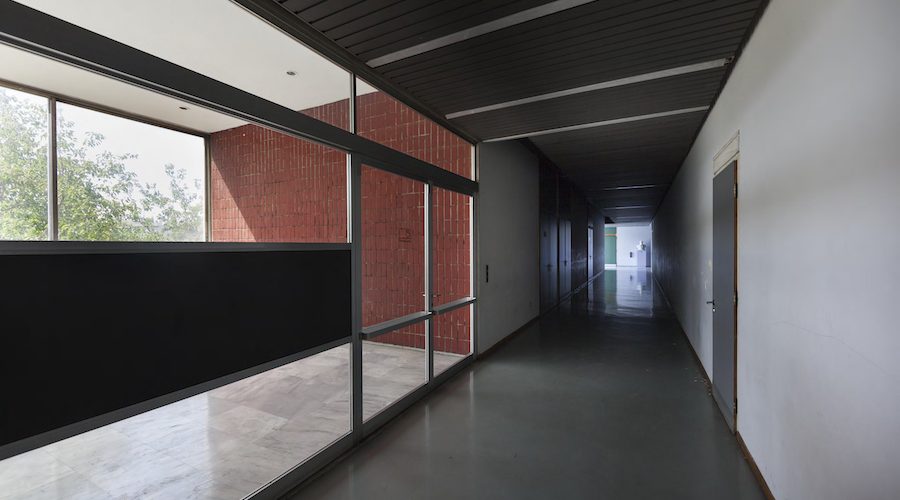
One of these now serves as the main entrance to the schools of the Athens Conservatoire and leads to the distinctive first-floor foyer, with a view onto the atrium with the olive trees. The influence of modernism is evident: the ceiling is made of exposed concrete, the wall features vertical unrendered brickwork, and large window panels facing the courtyard provide natural lighting for the space.
Athens Cultural Center
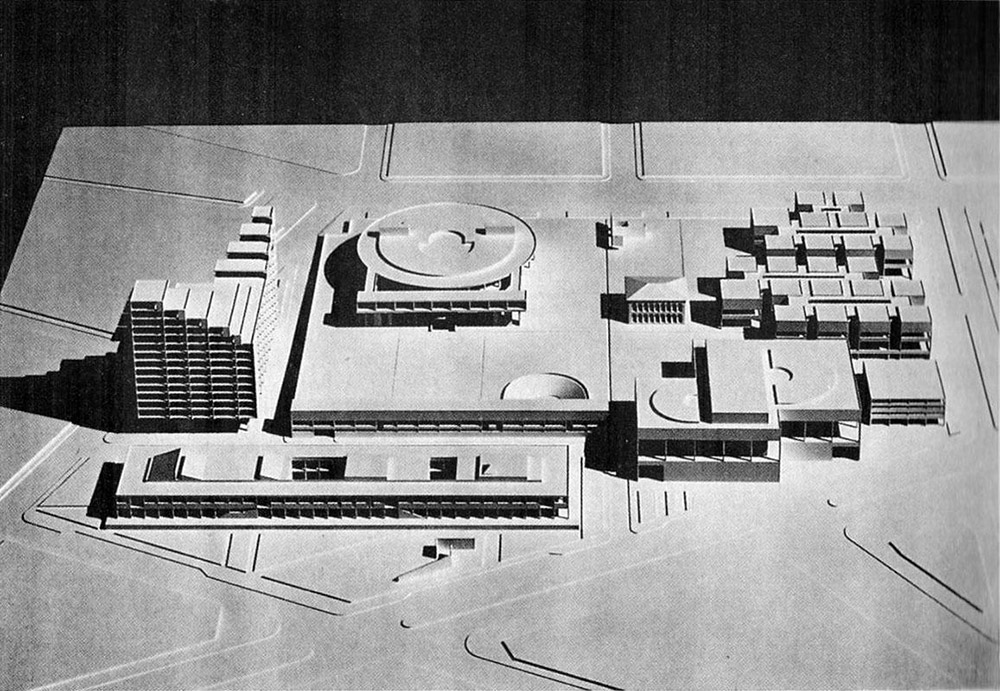
In 1959, the then-Minister Konstantinos Karamanlis launched an ambitious architectural competition for the creation of the Athens Cultural Centre in the area bounded by Vasilissis Sofias Avenue, Rigillis Street, Vasileos Georgiou II Street, and Vasileos Konstantinou Avenue.
Modelled after similar urban planning competitions in Europe and the United States, architects were invited to designate locations for a National Theatre, a Concert, Dance, Drama, and Conference Hall, a National Library, an Academy of Music (the present-day Athens Conservatoire), a National Gallery, an Open-Air Theatre, an Exhibition Space, Research Institutes, and an underground car park with 1,300 spaces.
The project sparked controversy due to what critics considered its exorbitant cost, especially given that the rapidly growing city faced far more pressing needs. For example, in the neighbouring district of Pangrati, the streets were still unpaved dirt roads.
Modernism – or, Less is More
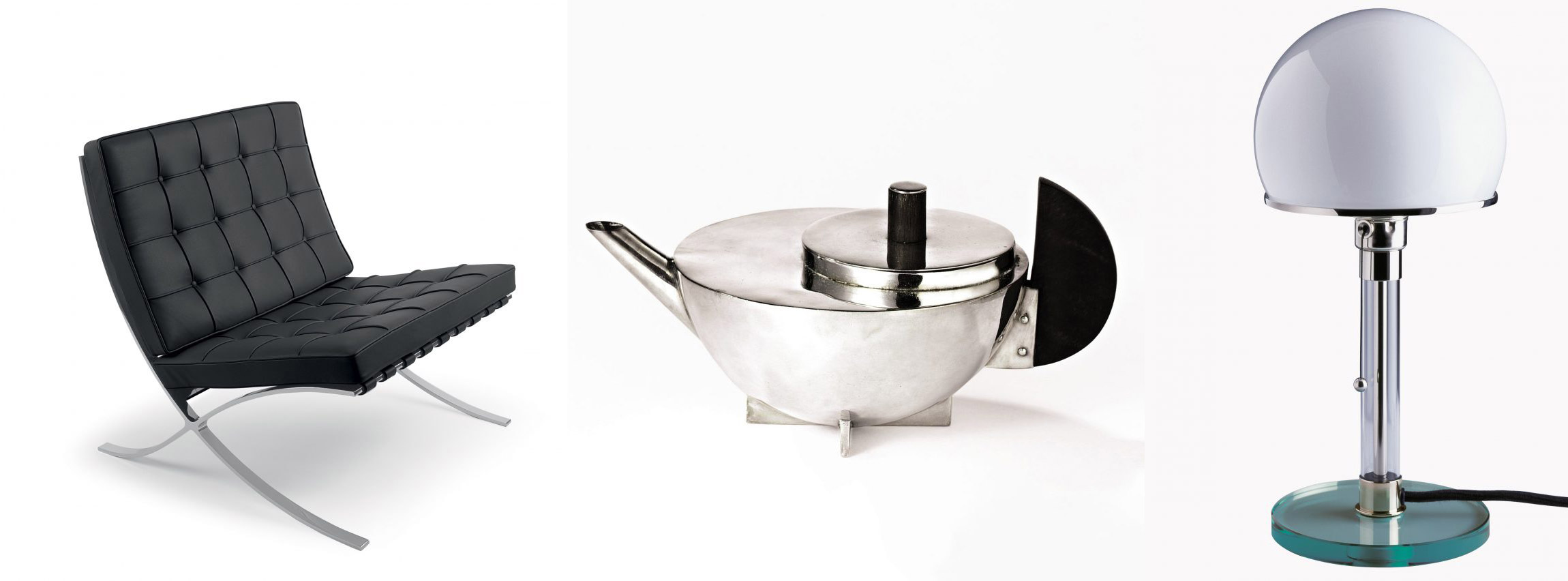
Students and teachers at the Bauhaus laid down the principles of the modernist movement: they believed that the design of objects surrounding human life should stem from function, be as simple as possible, and avoid unnecessary decoration or any features that might conceal the materials from which something is made. These very design principles, and the spirit of creative osmosis within the educational environment of the Bauhaus, which Despotopoulos had personally experienced, formed the innovative, at the time, design principles of the Athens Conservatoire.
Bauhaus – or, Why is this Building So Unique?
The architect of the Athens Conservatoire, Ioannis Despotopoulos, was an important representative of post-war modernism and the only Greek architect to have studied at the historic Bauhaus school. The Bauhaus, an innovative institution that operated for just 14 years in interwar Germany, left an indelible mark on the arts and architecture of the 20th century.
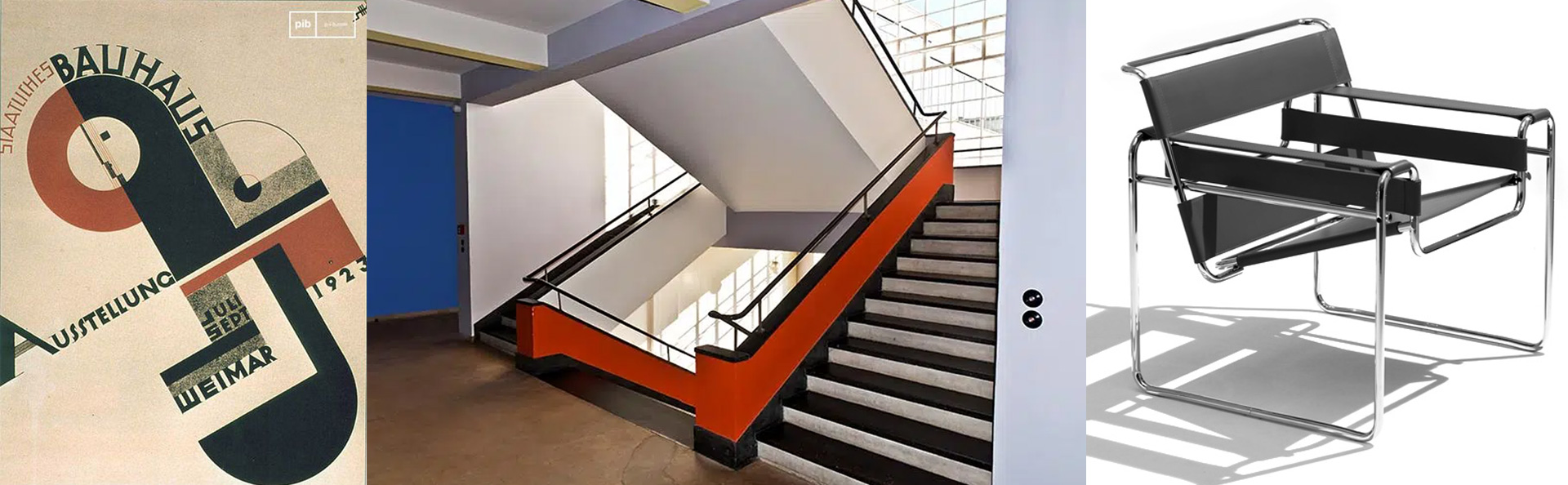
Some of the most influential architects, designers, and artists who would go on to define an entire era with their work passed through its doors. After the Second World War, many of the school’s teachers and students emigrated to the rapidly developing United States, where they led the way in shaping their respective disciplines.
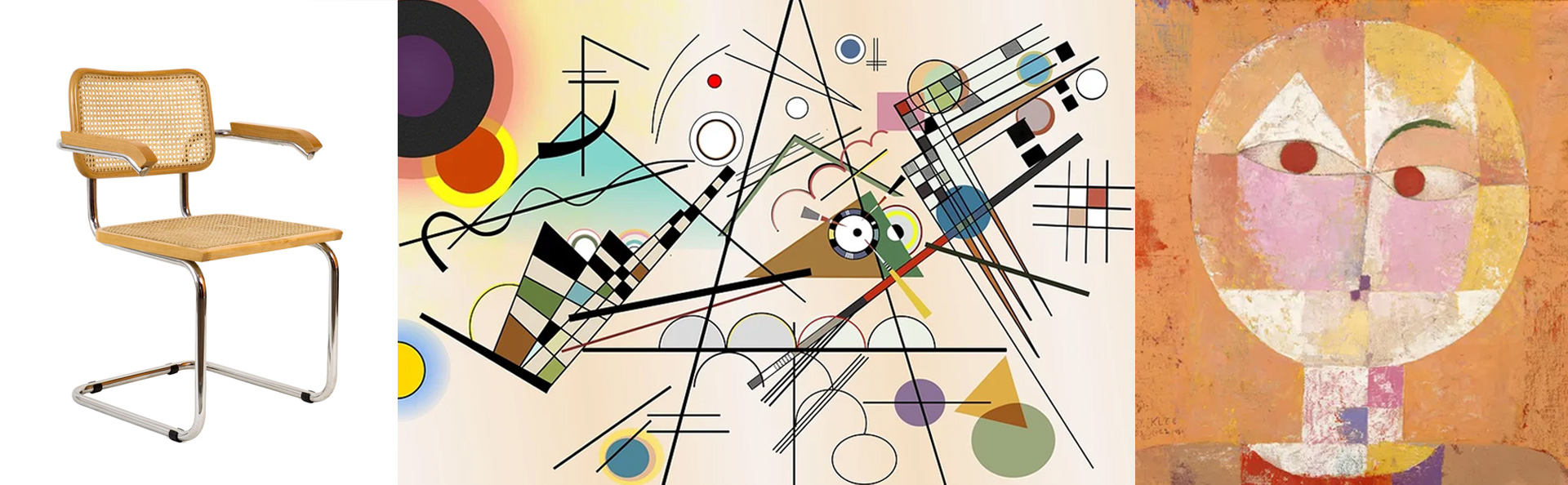
Bauhaus students trained daily applying a holistic approach that seems strikingly contemporary even today, one that blended fine and applied arts. Teachers and students lived as a community together on-site, receiving training in more than one discipline. They practised architecture, industrial design, weaving, pottery, photography, and painting, drawing inspiration from nature, history, and technology.
Building
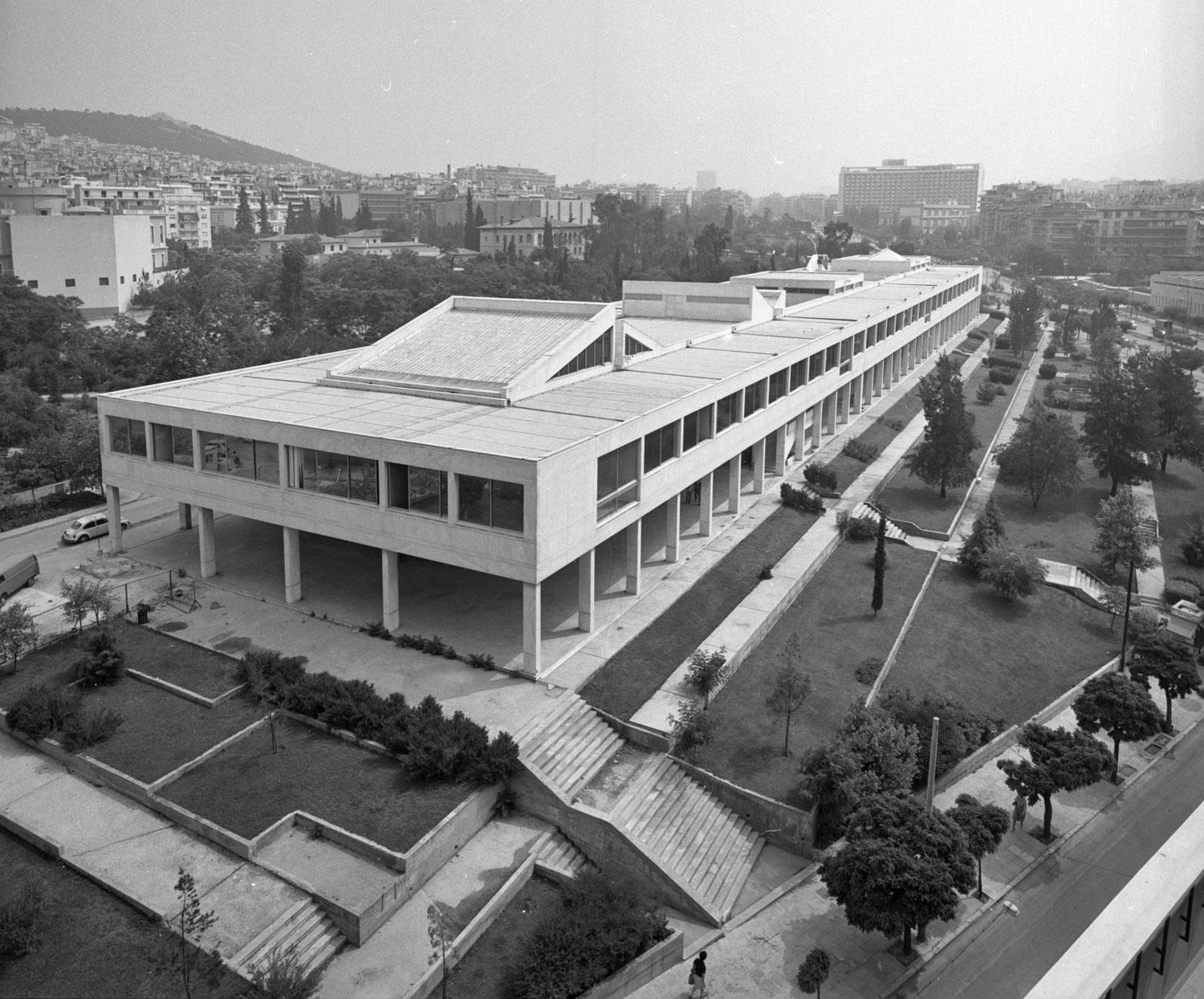
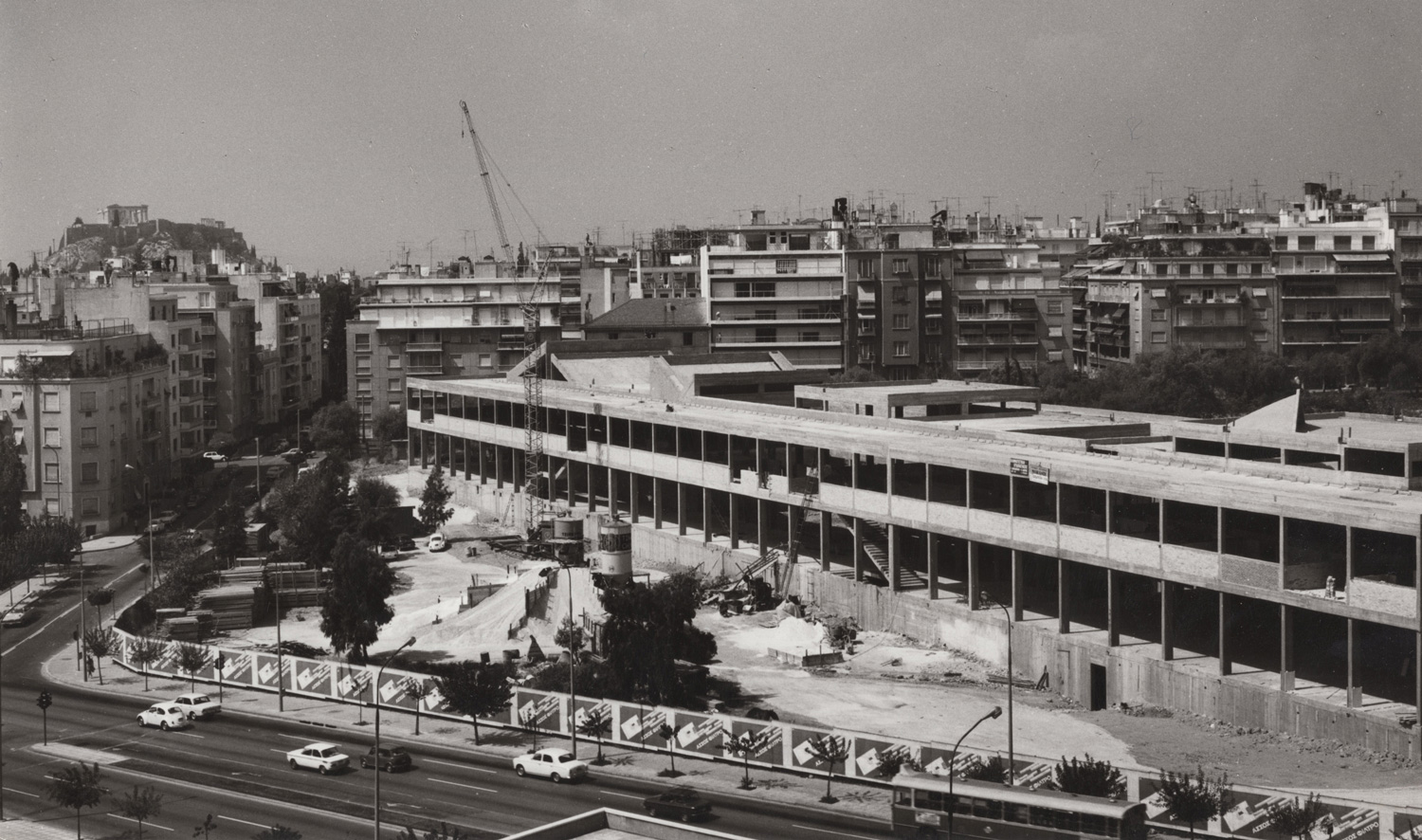
With a width of 32 metres and a length of 160 metres, this elongated 13,000-square-metre structure is, in reality, composed of three separate buildings, each approximately 53 metres long, constructed alongside each other to ensure earthquake resilience. It comprises a ground floor, an upper floor, and four distinct basement levels, housing a unique combination of 34 teaching spaces (for music, theatre, and dance), a library, an archive, six venues for artistic events, two courtyards, and four state-of-the-art studios.
Motifs
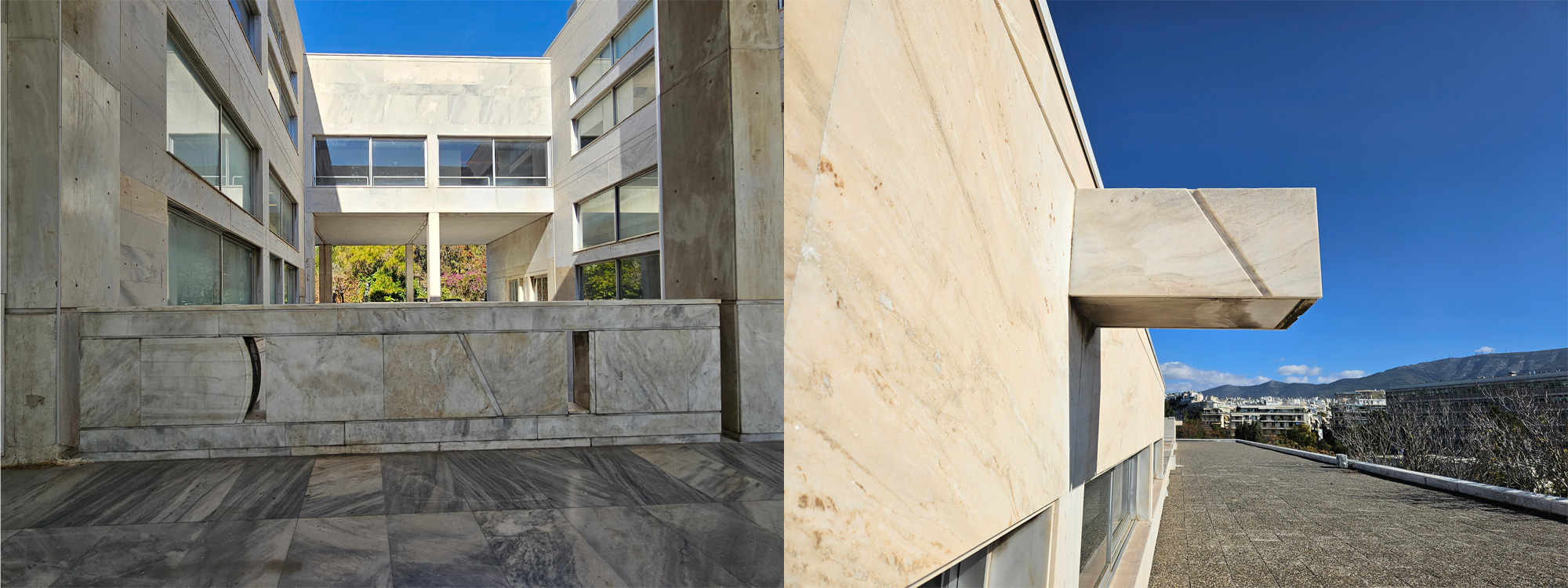
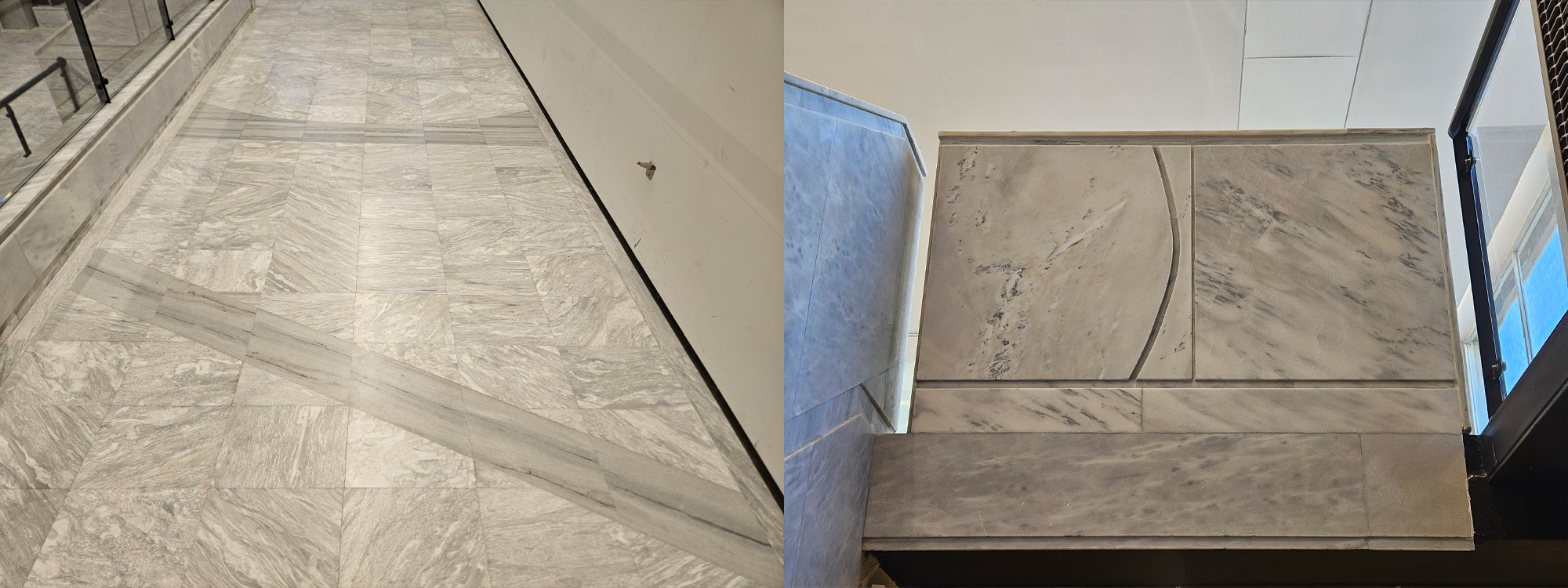
Despite the aversion to any kind of decoration that characterises both the Bauhaus style and modernist architecture in general, in the building of the Athens Conservatoire we can discern hidden motifs that run throughout the entire building, discreetly creating a unified visual identity. This is an enigmatic composition of vertical straight lines, a diagonal line, and occasional circular segments. These engravings can be found in the treatment of the solid marble balustrades of the staircases leading to the upper floor, the corresponding balustrades of the second 'hard' courtyard, and the balustrades around the Amphitheatre. However, we also see them in the marble floor of the stairs leading to the Foyer, in the visible brickwork cladding of the perimeter walls of the Multipurpose Hall, and in the marble cladding with oblique endings at the base of the columns.
Black Marble & A Surprise
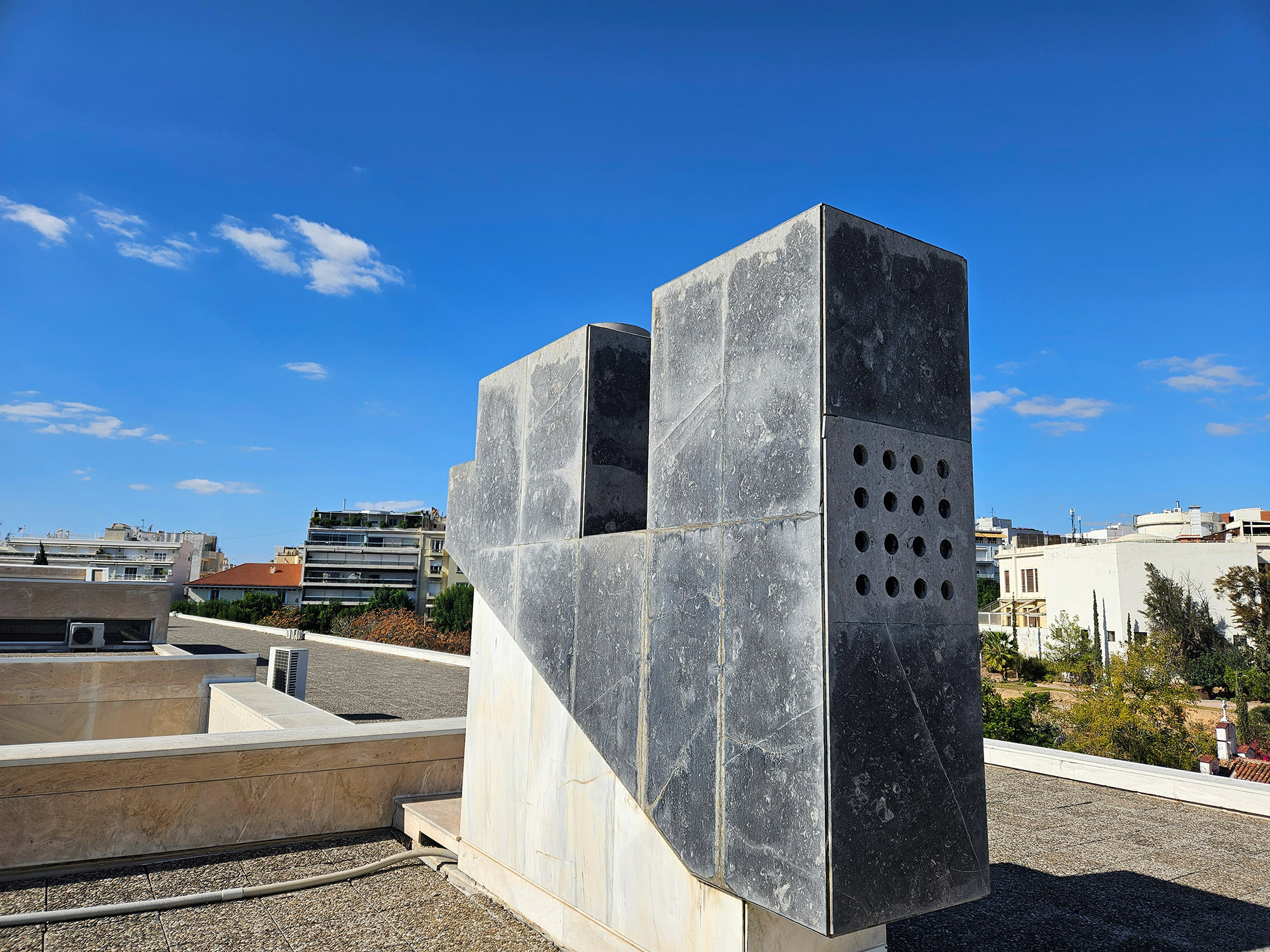
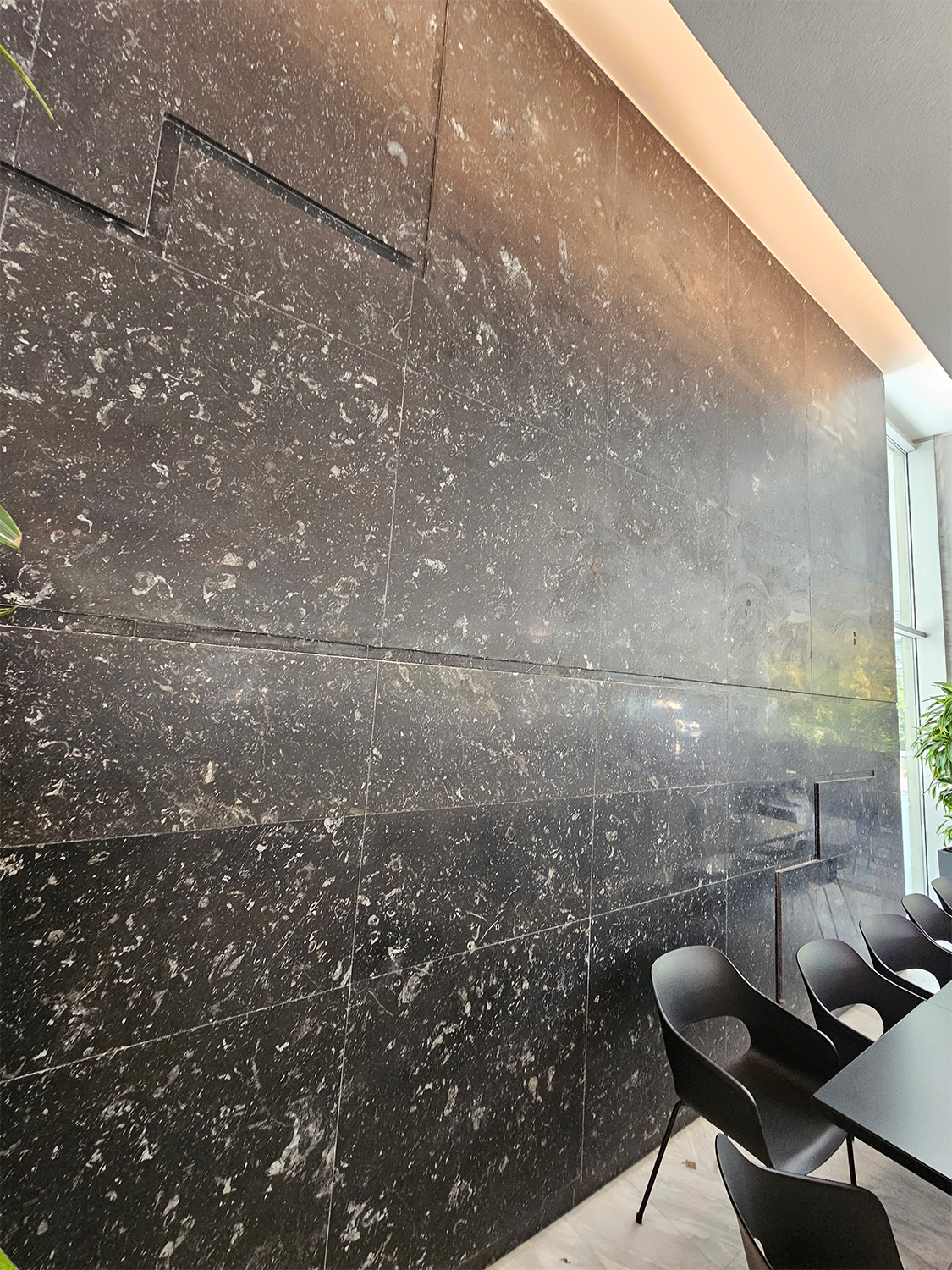
Beyond the motifs, two equally unique features deserve special mention: 1. The black marble cladding on the wall of the ground-floor café is composed of marble in three different thicknesses. It is one of only three places in the building where black marble, rather than white, is used, and it appears to symbolically depict a cross-section of the building. The other two locations are on the Roof and in the Multipurpose Hall.
2. The striking, engraved, perspective drawing of the Athens Conservatoire, faintly visible high up on the southern wall of the Colonnade.
Colonnade
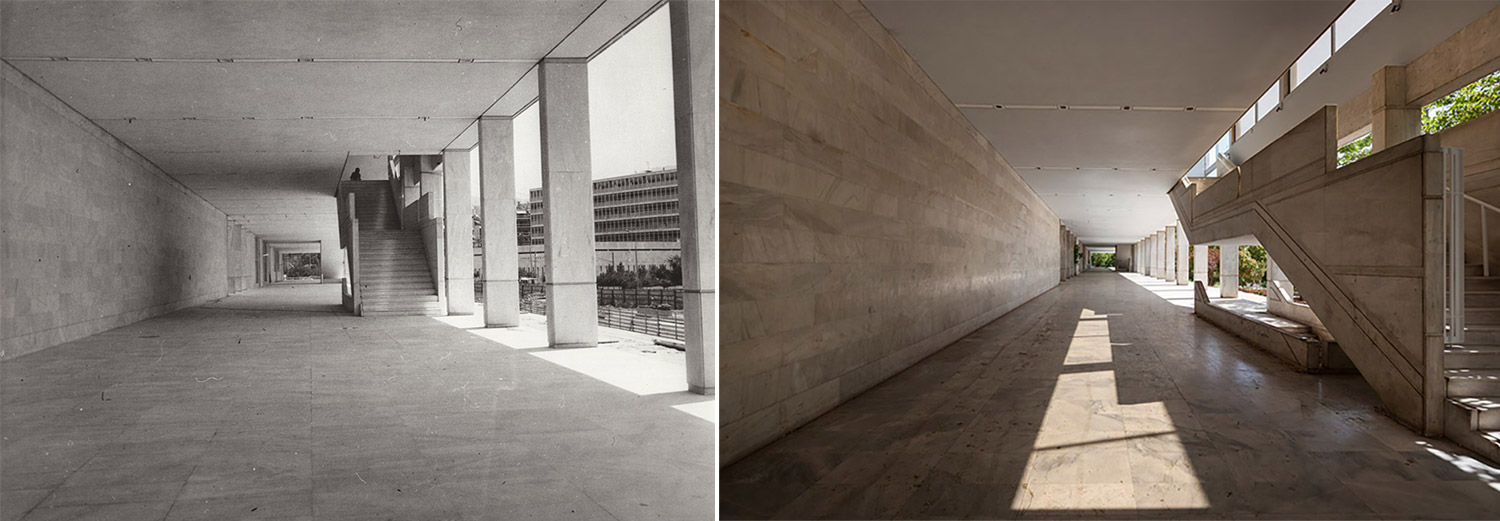
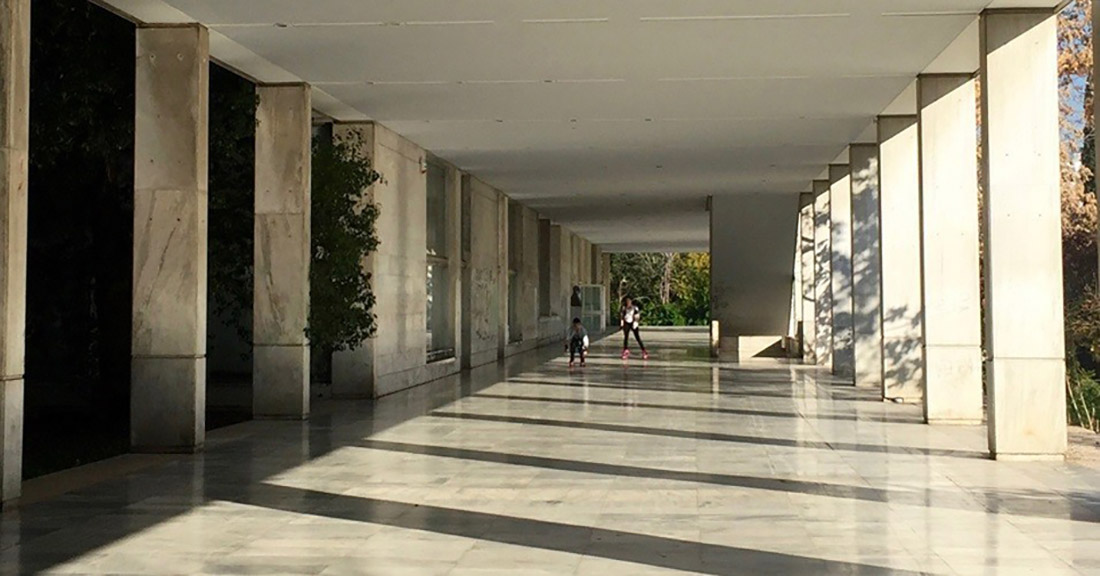
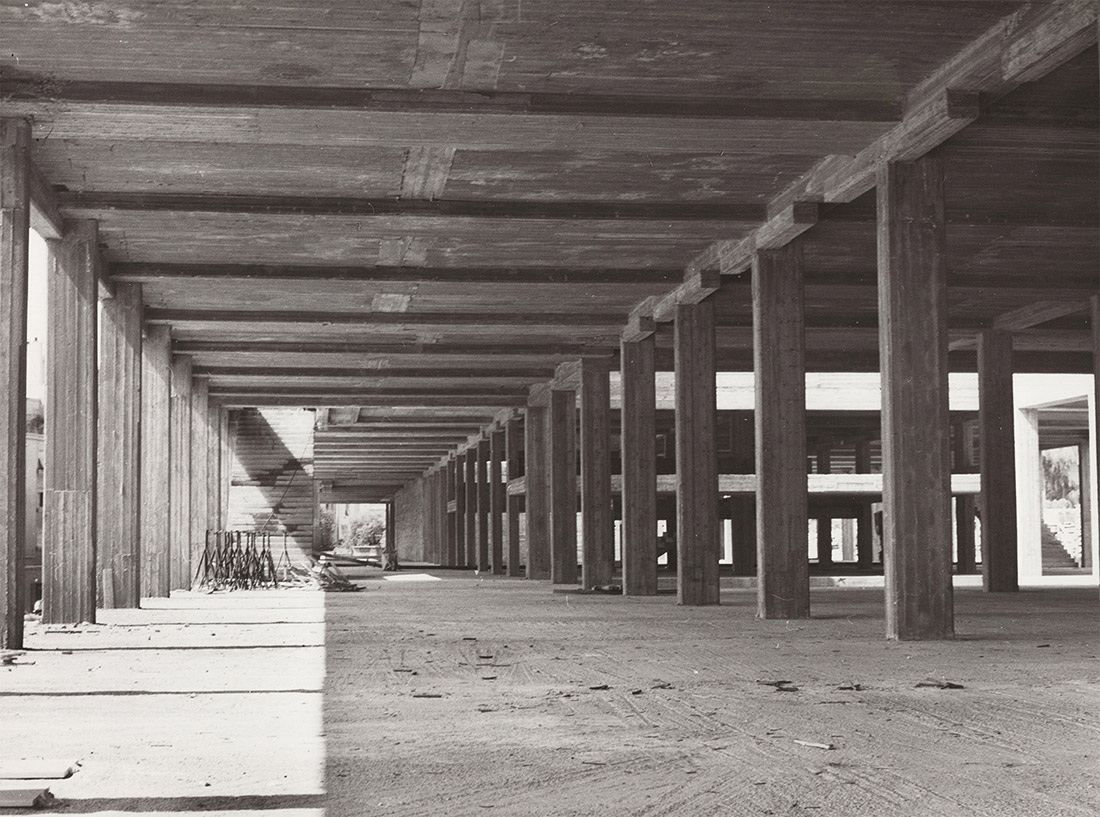
The colonnade on the ground floor is a defining architectural feature of the building. Architecturally, such spaces, from the time of the Ancient Agora to the present day, have served as areas for increased social interaction. The colonnade extends primarily along the southern side, in accordance with the principles of Mediterranean architecture, offering a shaded transitional space between the sun-drenched outdoors and the enclosed interior spaces of the building.
The slender forms of the columns and their white marble cladding are references to classical architecture, while their rhythmic repetition lends the building a distinct sense of lightness and grace.
Atriums
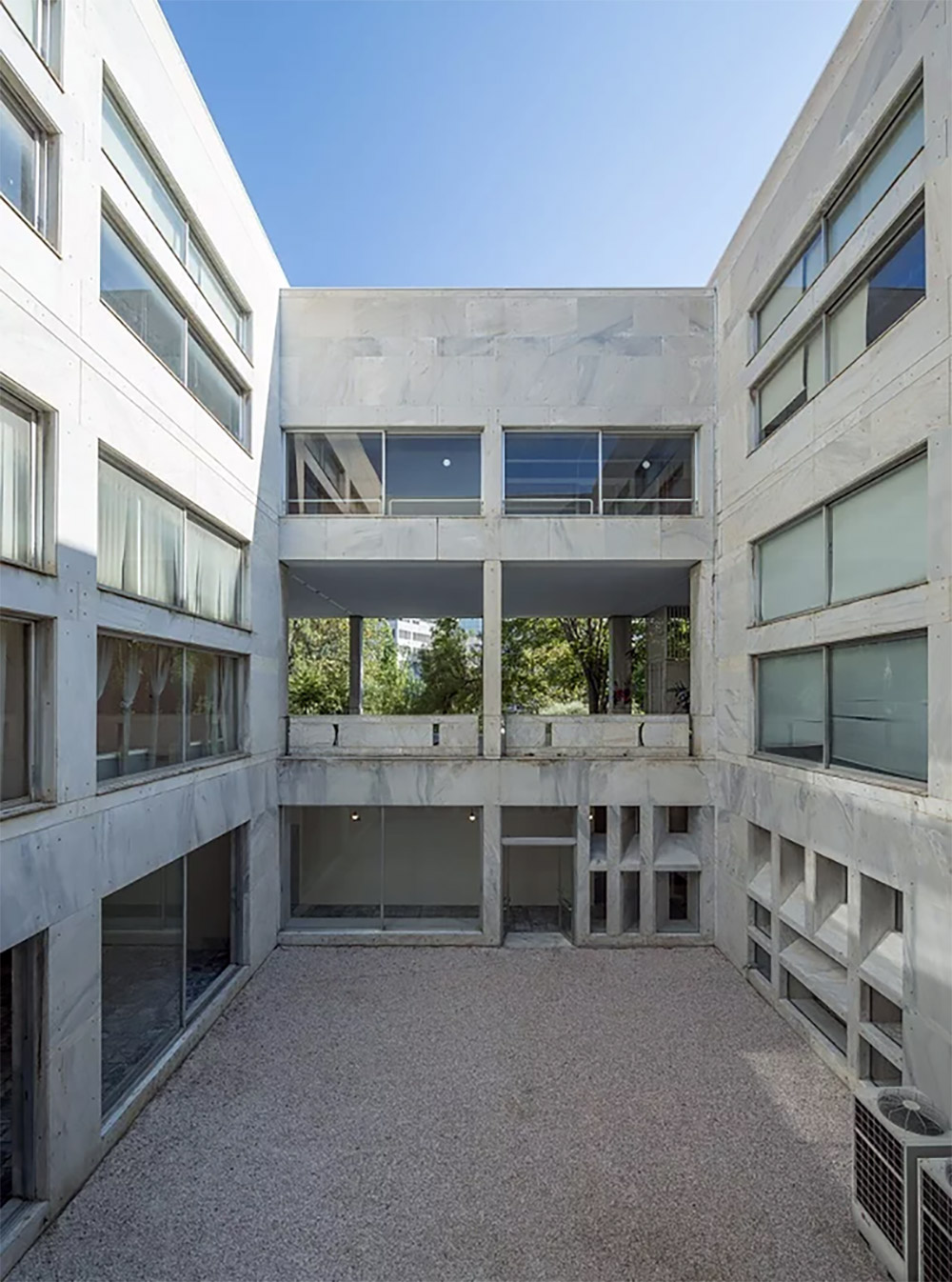
The building includes two atria designed to provide natural lighting to the interior spaces at the centre of the structure. Each atrium has a completely different character: one is more natural and “soft”, planted with olive trees and laid with soil; the other is more artificial and “hard”, with a rough floor that does not allow for planting. The latter was originally intended to serve as the forecourt of the underground chapel, which is presented separately.
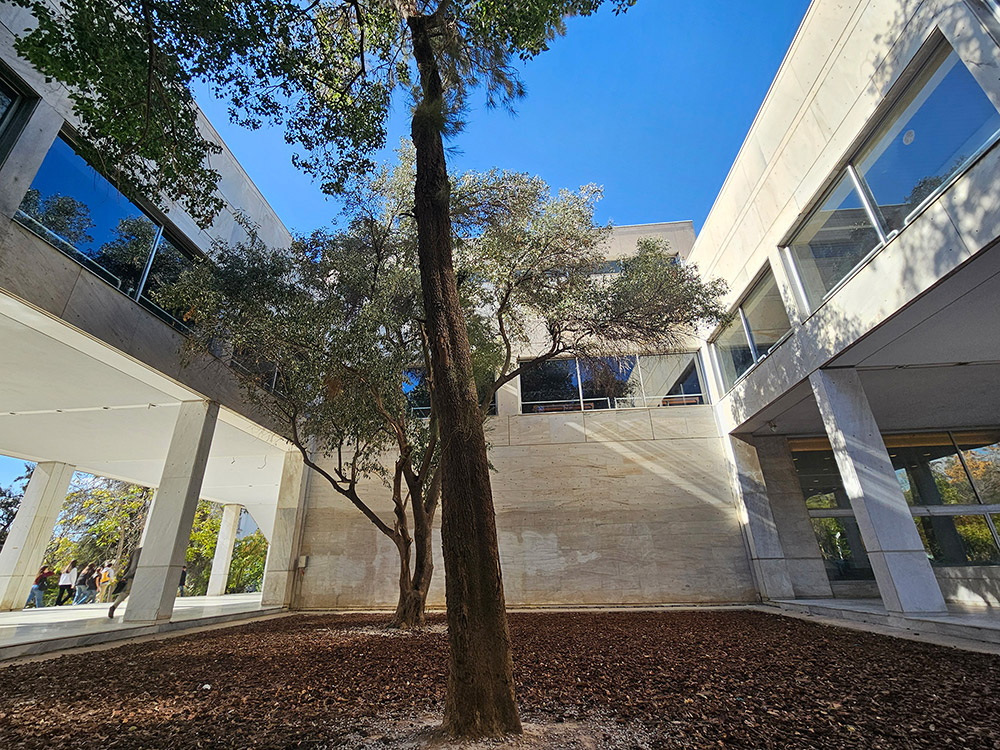
The atria were critical to the original design of the Athens Cultural Centre, as they functioned as breaks to the solid mass of the Athens Conservatoire building, lightening its monolithic volume and offering unobstructed sightlines from Mount Hymettus to Lycabettus Hill, and vice versa.
Upper Floor
Perimeter: The upper floor is composed of three zones. An outer perimeter ring houses the music teaching rooms and the administrative offices. All the classrooms have heavy, soundproofing doors, painted in colours that were originally intended to signify the different uses of the rooms. One wall is plastered, while the other features exposed vertical brickwork. The administrative offices are distinguished by the marble lintels above their entrances.
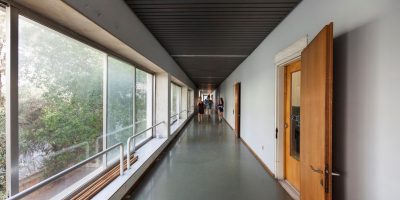
Circulation Ring: A wide circulation corridor runs through the centre of the building. Large window-walls at its outer edges, as well as on its inner sides facing the two atria, allow natural light to flood in.
Central Zone: The central zone of the upper floor comprises large collective-use spaces and rooms for group instruction: the Aris Garoufalis Concert and Conference Hall, the Black Box of the Drama School, Room 35 (Chiona Xanthopoulou-Schwarz Digital Communication Hub), the spacious Ballet Hall, as well as the Archives of the Athens Conservatoire. All of these rooms are marked by bold morphological plasticity – especially in their ceilings – which culminates in the striking architectural formation of the building’s roof.
Upper Floor
Perimeter: The upper floor is composed of three zones. An outer perimeter ring houses the music teaching rooms and the administrative offices. All the classrooms have heavy, soundproofing doors, painted in colours that were originally intended to signify the different uses of the rooms. One wall is plastered, while the other features exposed vertical brickwork. The administrative offices are distinguished by the marble lintels above their entrances.
Circulation Ring: A wide circulation corridor runs through the centre of the building. Large window-walls at its outer edges, as well as on its inner sides facing the two atria, allow natural light to flood in.
Central Zone: The central zone of the upper floor comprises large collective-use spaces and rooms for group instruction: the Aris Garoufalis Concert and Conference Hall, the Black Box of the Drama School, Room 35 (Chiona Xanthopoulou-Schwarz Digital Communication Hub), the spacious Ballet Hall, as well as the Archives of the Athens Conservatoire. All of these rooms are marked by bold morphological plasticity – especially in their ceilings – which culminates in the striking architectural formation of the building’s roof.
Amphitheatre Ioannis Despotopoulos
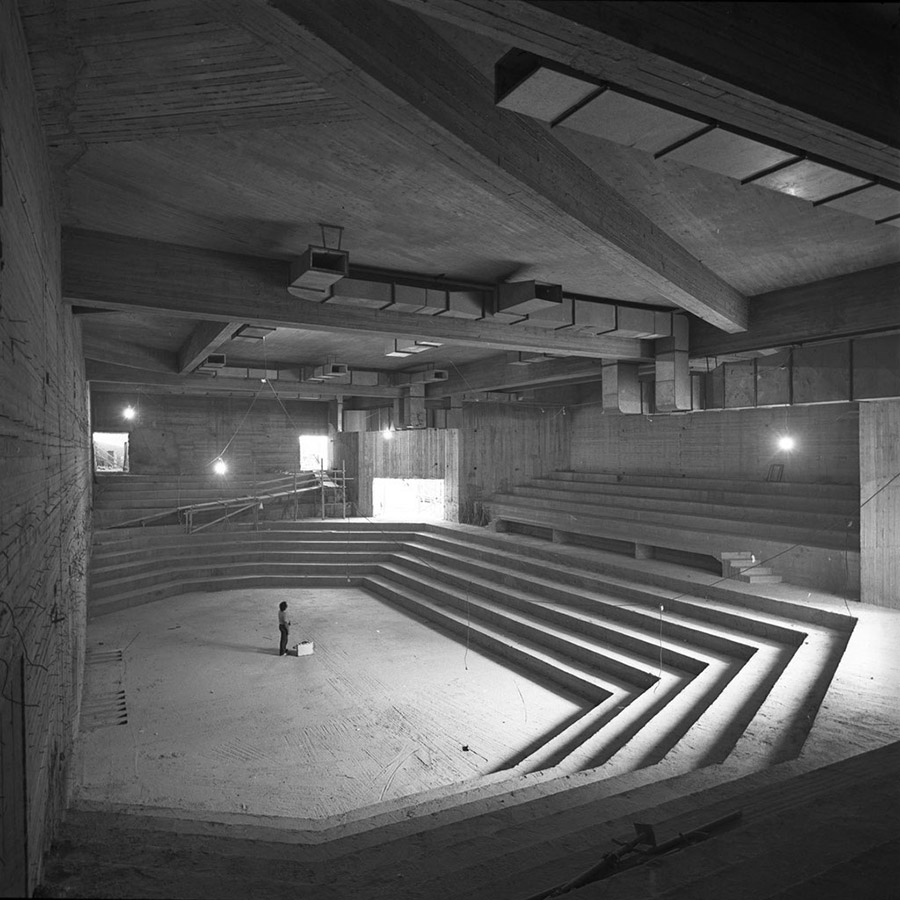
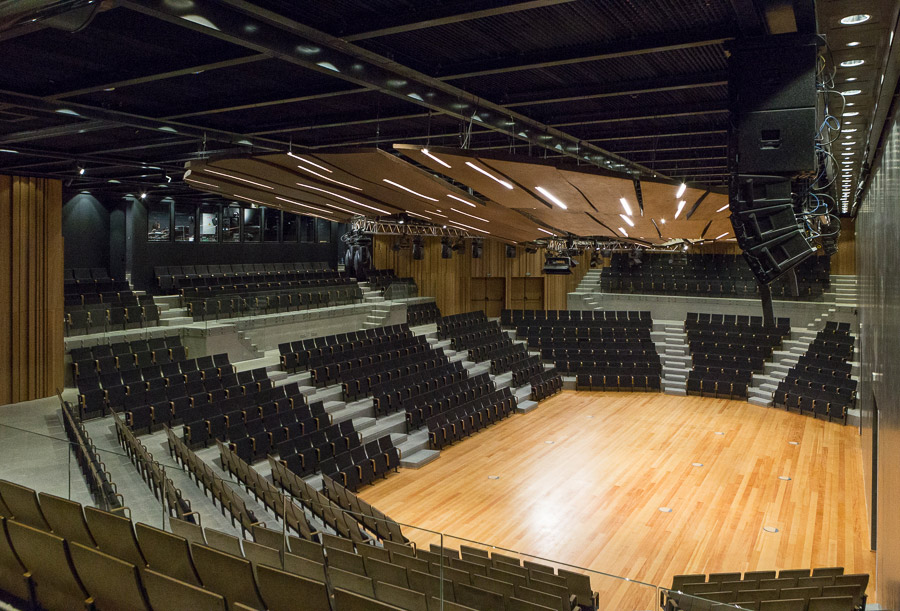
The large amphitheatre of the Athens Conservatoire, with a seating capacity of 600, has a distinctive geometry and structure. Internally, with its characteristic stepped seating, its architecture evokes the open-air theatres of classical Greece. As in ancient theatres, the stage is not set opposite the audience, but rather the audience surrounds it. Aside from the necessary wooden panelling for acoustic purposes, exposed concrete dominates, in keeping with the Bauhaus design ethos and the principles of modernism, which valued ‘honesty’ and rejected unnecessary decoration. From the outside, the large amphitheatre appears like a striking sculpted prism made of reinforced concrete with marble cladding, surrounded by large window-walls. Positioned directly opposite the café entrance, it almost seems to float in the space.
Arts Foyer
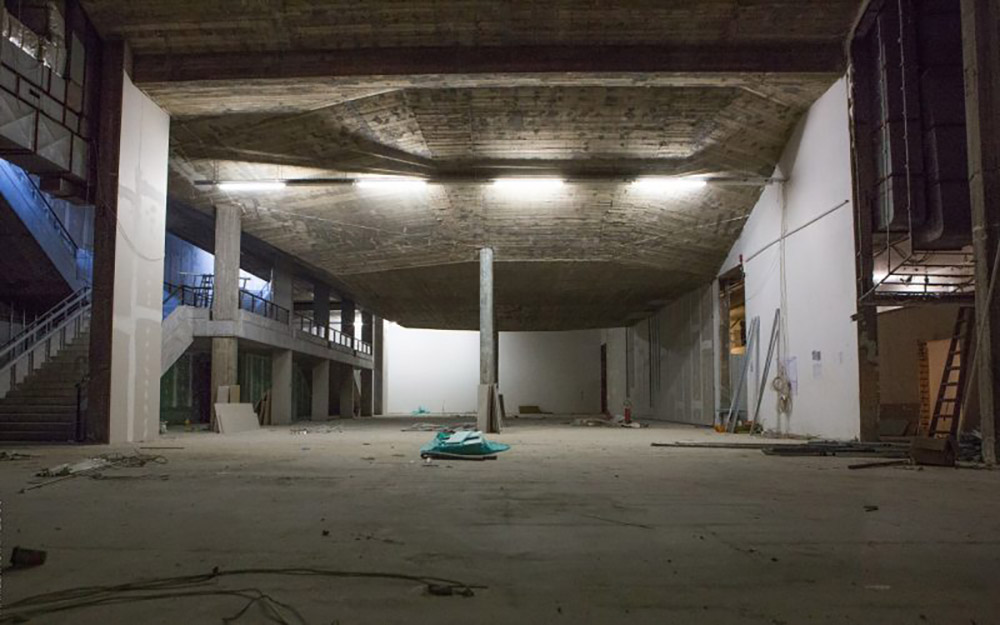
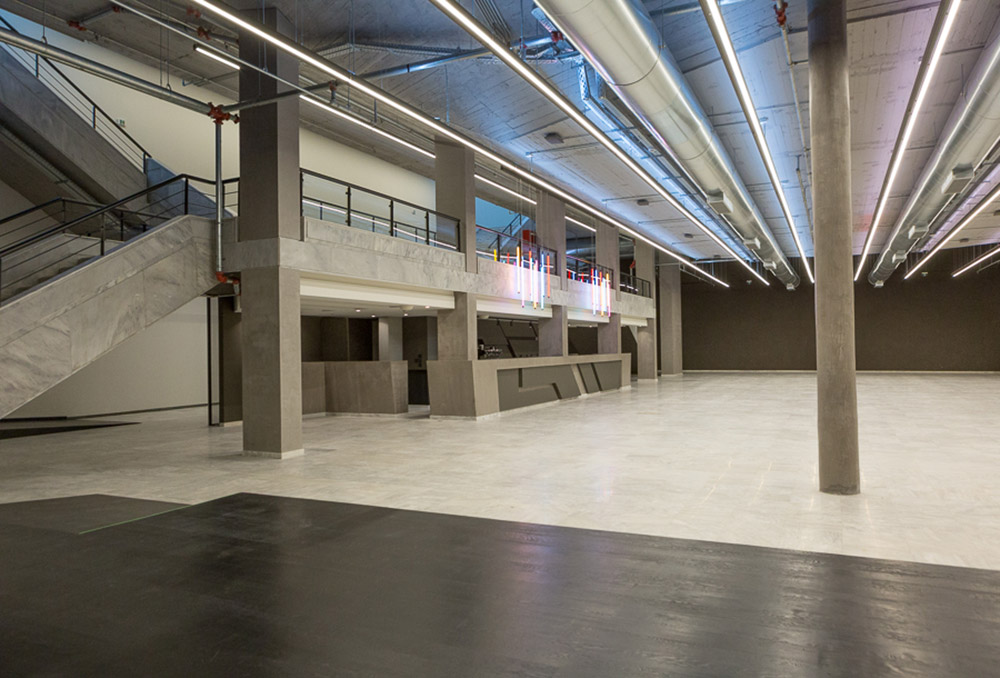
Directly beneath the large amphitheatre lies the main foyer. It is accessed via the wide twin staircases, while the columns supporting the amphitheatre stage divide the space in two. Here too, the construction materials dominate in their natural form: exposed concrete, marble, glass, and metal.
Multipurpose Space Ω2
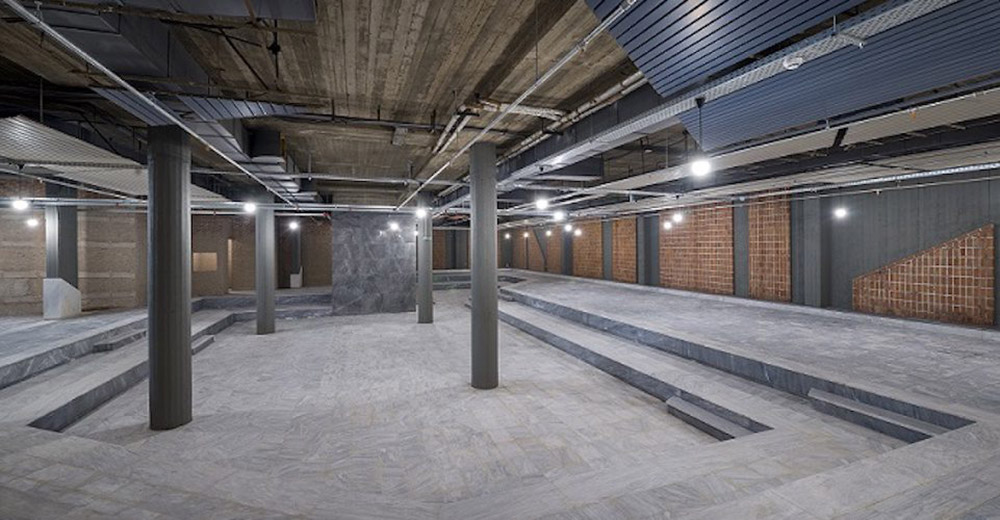
The underground Multipurpose Hall is defined by its two-level configuration, with amphitheatrically arranged seating surrounding a central polygonal area supported by free-standing columns. The design of the space follows the Bauhaus philosophy: exposed concrete surfaces, unrendered brick, and visible mechanical installations.
In a contradiction to the modernist rejection of all decoration, one will notice that the bricks are not laid horizontally, as they would be in standard masonry, but vertically. For architects, this implies that the bricks serve as cladding over an other wall (presumably the external concrete walls of the basement), even forming patterns – diagonal lines, reliefs and recesses. The use of vertically laid, unrendered brick can also be found in several other surfaces, particularly on the first floor of the building.
In the Multipurpose Hall is found one of the three locations in the building where black marble is used: the lift. The other two are in the café and the roof level.
Chapel
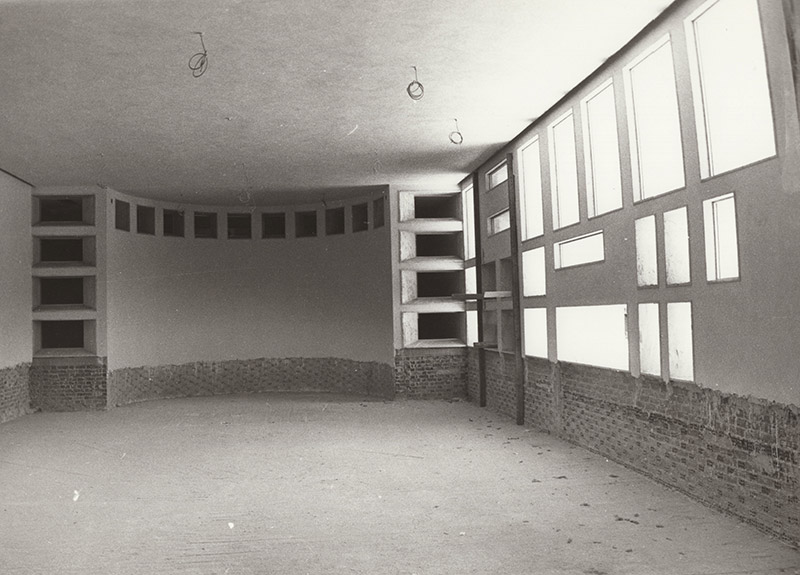
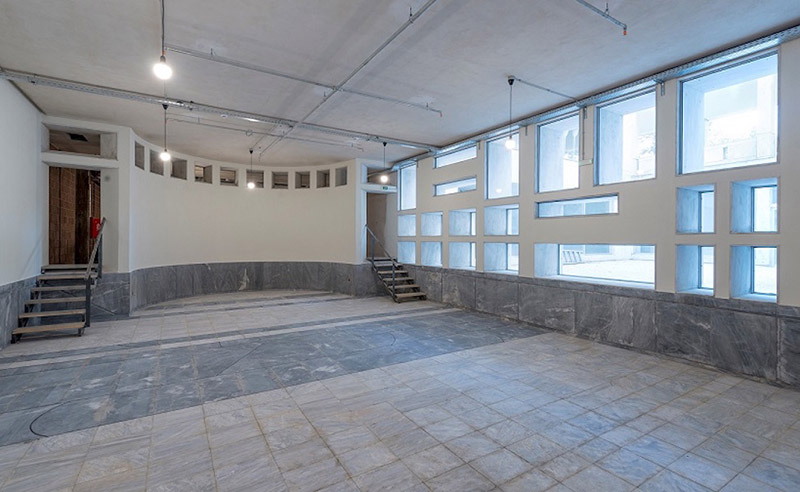
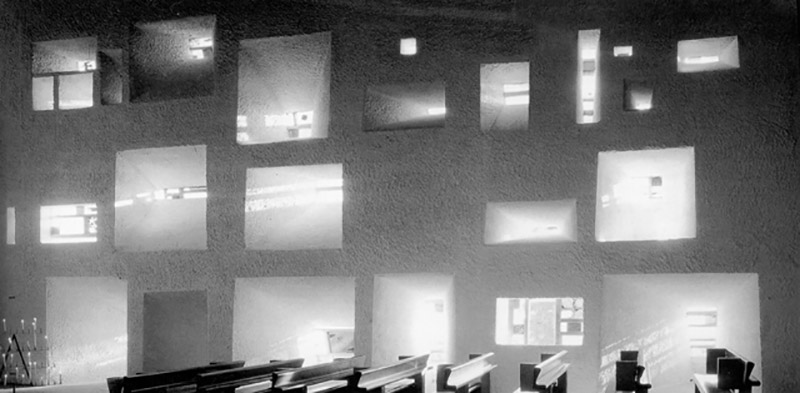
The space, which has been nicknamed the 'chapel', was initially designed as a teaching room for Byzantine music. The architect retained the morphology of the semi-circular apse at the eastern end of Orthodox churches, forming a corresponding tympanum on the eastern side of the space. If one stands in the centre of the semi-circle and sings facing the wall, they will discover that the curved wall acts as a resonator. The walls of the chapel facing the underground atrium have characteristic, geometric windows of different sizes and proportions, a direct reference to the iconic church of Notre Dame Du Haut in the small French village of Ronchamp, a work of the architect Le Corbusier from 1950.
It is no coincidence that the great master of modernism had visited Greece several times and was impressed by Cycladic architecture, repeatedly taking notes and sketches of the shapes of the white buildings, the small openings, and their bold structural quality (see the Monastery of Hozoviotissa in Amorgos). The space now houses a permanent exhibition of the National Centre for Scientific Research "Demokritos" on the theme of Democracy.
Rooftop
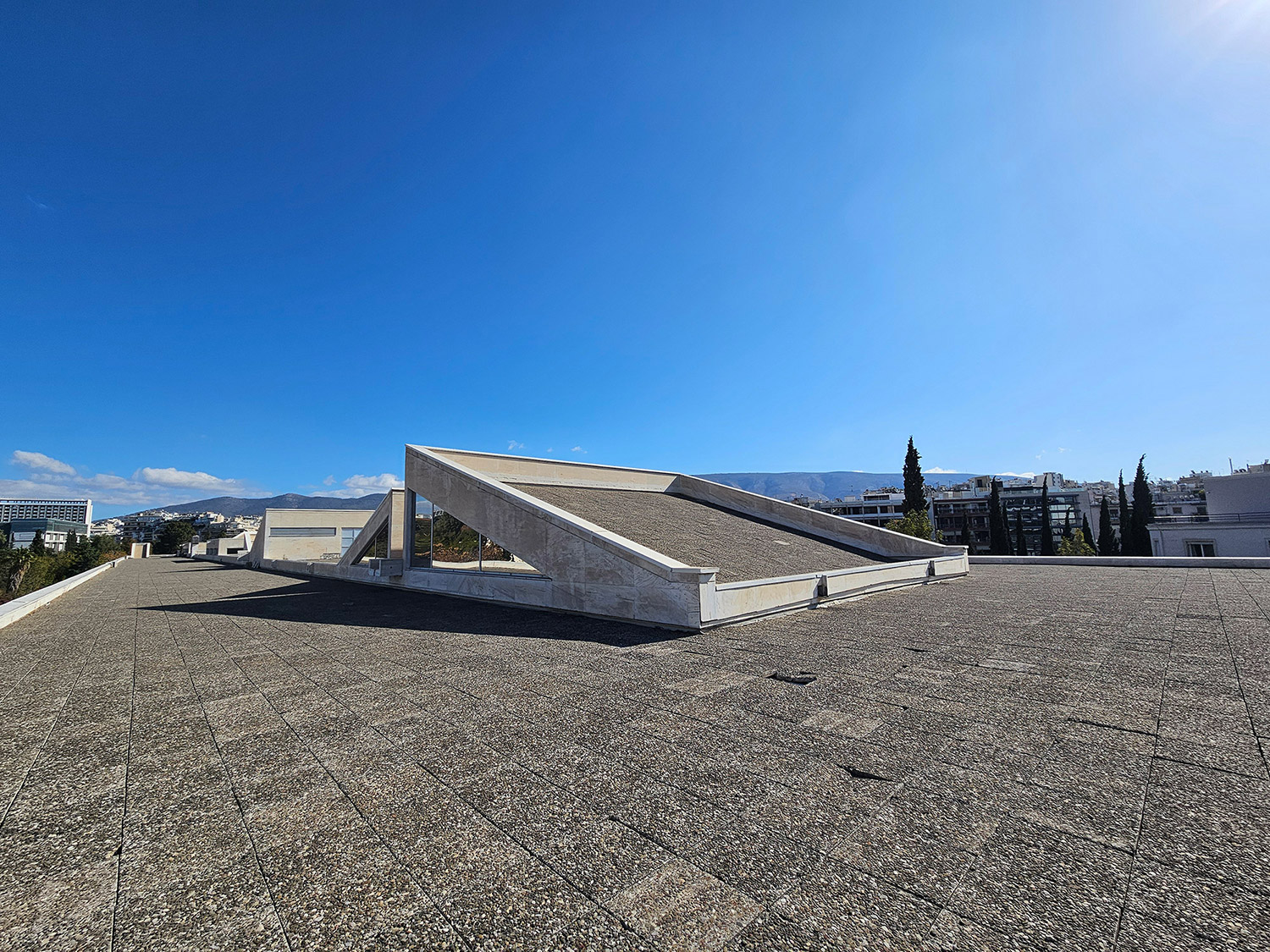
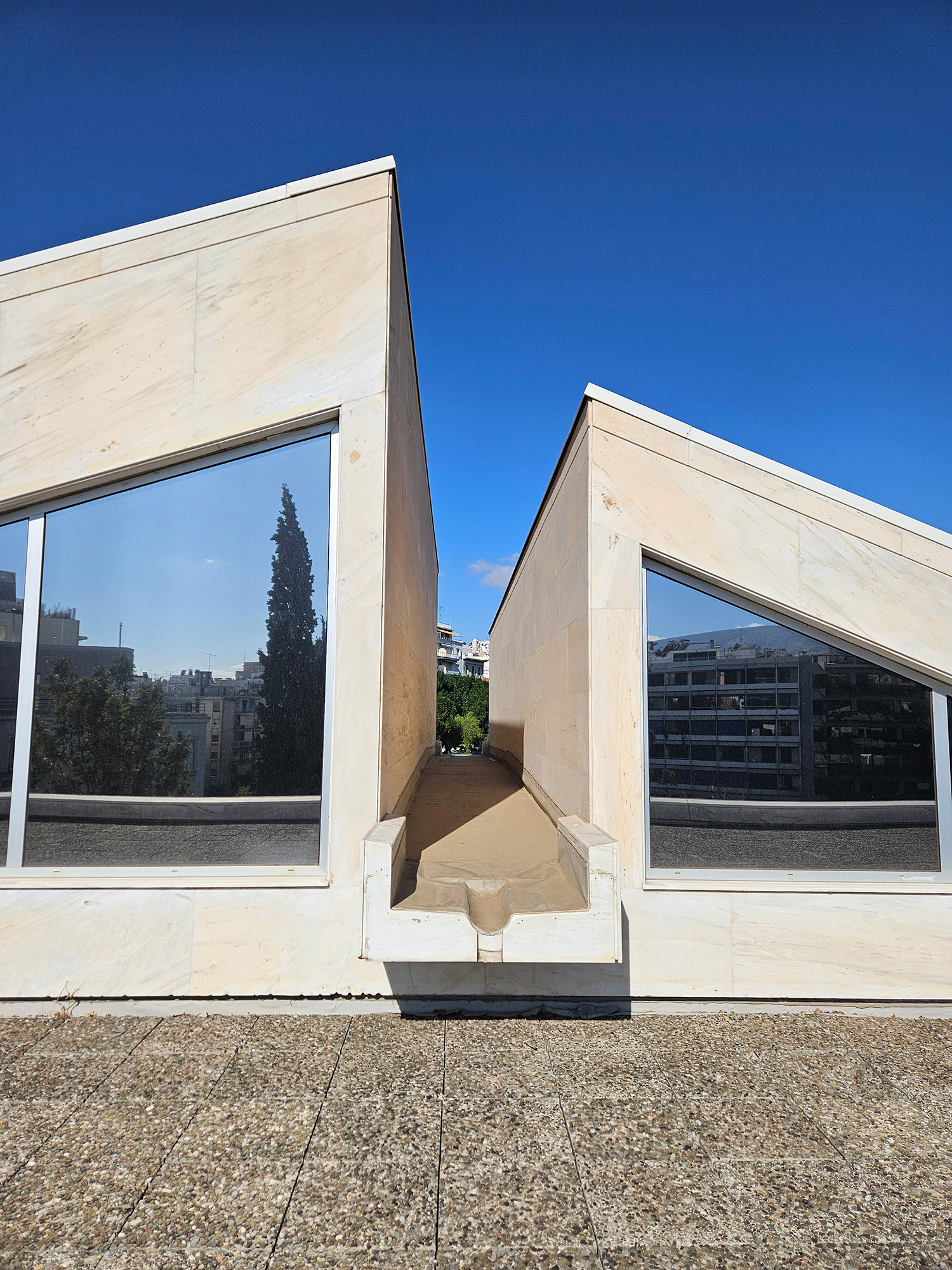
The impressive rooftop of the Athens Conservatoire, with the sculptural terminations of the rooms and ventilation shafts of the mechanical installations clad in white and black marble, constitutes the fifth aspect of the building, and is one of the reasons the work was declared a modern architectural monument. It is noteworthy that, while the entire rest of the building is clad in white marble, Despotopoulos chose to use black marble in three locations. This is one of them. The other two can be found in the ground-floor café and in the Multipurpose Hall Ω2.